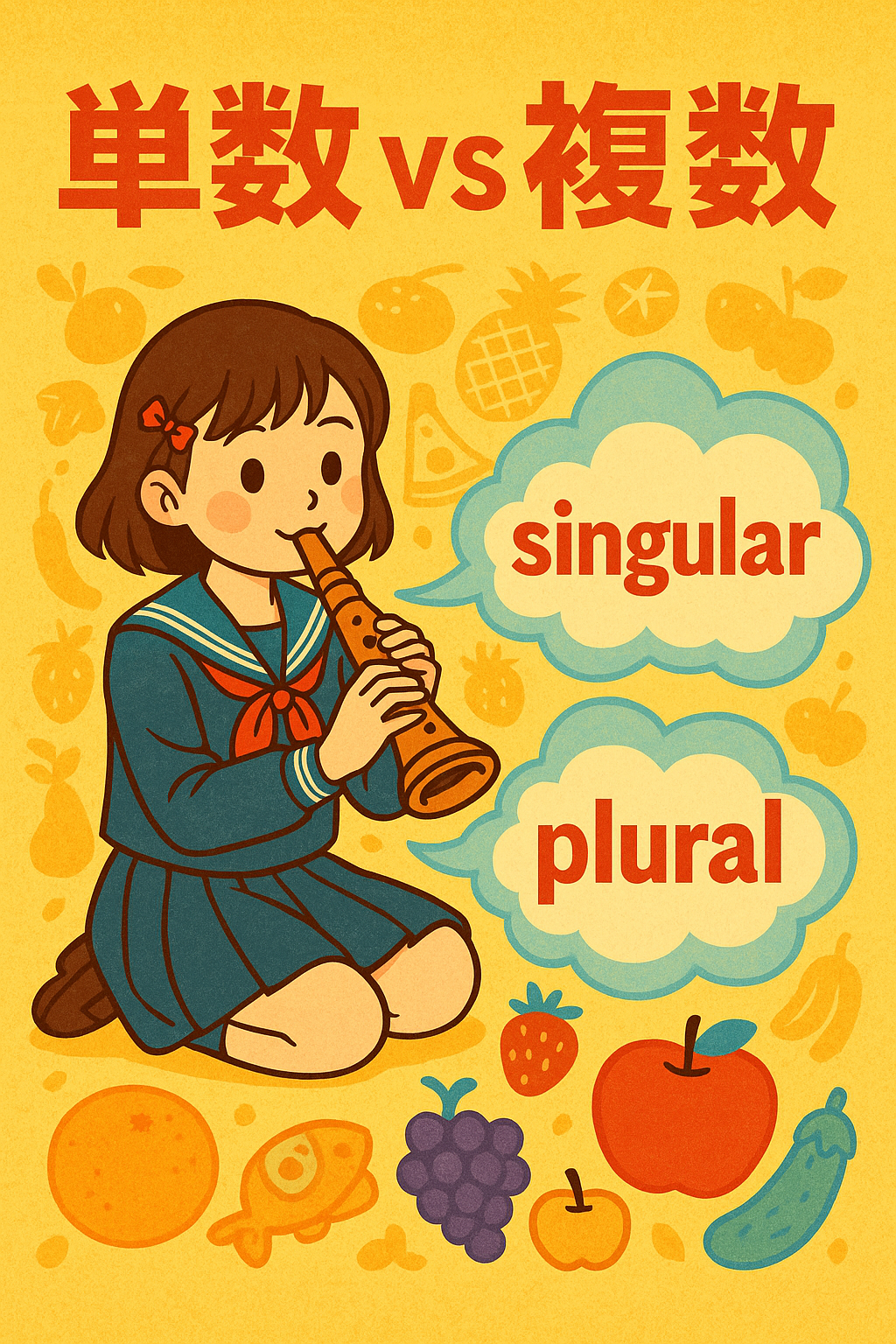

✨複数形の基本ルールとその例外
🔤 Rule 1: add “s” or “es”
・book → books
・dish → dishes
❗ Rule 2: 不規則変化
・man → men
・child → children
・foot → feet
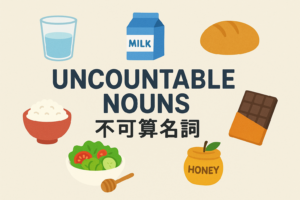
🚫 Rule 3: 複数にしない単語(不可算名詞)
・ water, rice, furniture, information, news など
📍We say “a piece of furniture,” not “a furniture.”
🍇 food vs foods, fruit vs fruits, sport vs sports
これらはとくに日本語にない感覚なので要注意!
🍽 food
単数(不可算名詞):食べ物全体
Japanese food is healthy and delicious.
(日本食は健康的でおいしい。)
複数(可算扱い): 様々な種類の食べ物
We tried many different foods at the international festival.
(国際フェスでさまざまな料理を食べてみた。)
🍓 fruit
単数(不可算名詞): 果物全体
Fruit is an important part of a healthy diet.
(果物は健康的な食事に欠かせない。)
複数(可算名詞): 種類
Tropical fruits like mangoes and pineapples are my favorite.
(マンゴーやパイナップルのような熱帯の果物が大好き。)
⚽ sport
単数 (不可算名詞):スポーツ全般
Sport keeps both your body and mind healthy.
(スポーツは体も心も健康にしてくれる。)
複数 (可算名詞):種目ごと (winter sports, team sports)
Winter sports such as skiing and snowboarding are very popular.
(スキーやスノーボードのような冬のスポーツはとても人気がある。)
📰 news はなぜ s がついているのに単数?
◉ 見た目と違って、不可算名詞(uncountable noun)
news は複数形のように見えますが、もともと単数扱いの不可算名詞です。
動詞は常に単数形と一致します。
✅ “The news is surprising.”
❌ “The news are surprising.”
◉ なぜ s がついているの?
語源は “new” + 集合を表す接尾辞 “-s” のようなもの。
複数の「出来事・情報」がまとまったもの、という意味で、s がついています。
しかし 「全体としての1つのかたまり」 として扱うので、文法上は 単数。
✅ food や fruit と同じように「集合 vs 種類・数」の視点
food:食べ物という概念(不可算)
foods:複数の種類(可算)
fruit:果物全般(不可算)
fruits:種類(可算)
news:さまざまな出来事の集合体(不可算)→ 数えないし、単数扱い
🎯「s」はただの語尾じゃない!
英語の “s” は、単に名詞を複数にする記号ではありません。
その つく・つかない の違いには、意味、使い方、そして文化的な考え方までもが表れます。
✅ fruit と fruits:果物全体 vs 種類
✅ sport と sports:概念 vs 種目
✅ food と foods:食べ物全般 vs 多様な料理
✅ news は形は複数、でも単数扱い!
つまり、“s” の正体は、英語の世界の見方を映し出す小さなシグナル。
そこに気づけば、英語はもっと奥深く、もっと面白くなる!
🍎 🍌 🍈 🍇 🍊 🍒 🍍 🥑
🎀 おまけ
英語の複数形は、「名詞のあとにsをつける」と習いますよね。
でも、「あとに」って英語でなんて言うの?と思って調べたら…
❌ Add an “s” behind the noun.
❌ Add an “s” after the noun.
✅ Add an “s” to the end of the word.
日本語の「あとに」を英語にすると、いろいろありますね!
「behind」を使っていたりするのもあるので、間違いとは言い切れないけど、英語として自然なのは “to the end of the word” や “at the end of the noun” です。
・after は「時間」の順序を表す言葉。「単語のあと」は時間じゃないので✕。
・behind は「背後」という意味。体の後ろには立てても、単語の後ろにはあまり使いません。